
Quick answer: light bleeding or spotting after an embryo transfer is common and doesn’t mean your cycle has failed — it can even be a sign that implantation is under way. Severe bleeding or cramping in the first two weeks should be reported to your clinic straight away.
✓ Usually normal
- Light spotting in the days after transfer
- Pink or brownish discharge
- Mild cramping
✗ Contact your clinic promptly
- Heavy or bright-red bleeding
- Severe cramping or abdominal pain
- Fever, dizziness, or shortness of breath
Other Symptoms After the Embryo Transfer
-
Cramping
-
Bloating
When is the Embryo Transfer in IVF Done?
Embryo transfer is the final step of the IVF process. It is a simple procedure that involves placing high-quality embryos in the woman’s uterus using ultrasound-guided aspiration. The goal of embryo transfer is to establish a pregnancy following fertilization achieved through an ICSI (intracytoplasmic sperm injection) procedure. Embryos are generally transferred to the woman’s uterus at the cleavage stage (day 3) or at the blastocyst stage (day 5) of development. After fertilization occurs, embryos are cultured in our specialized laboratory for a few days. During this time, they are assessed for quality. Based on the embryo quality report, our EuroCARE IVF doctor selects embryos with the best chance of implantation.Blastocyst Transfer
A blastocyst transfer is an embryo transfer in which one or more blastocyst embryos are transferred in the woman’s uterus. This is usually done on the fifth day after the egg retrieval. After the mature eggs have been removed from the patient’s ovaries (egg retrieval), they are fertilized in our lab by means of an ICSI (intracytoplasmic sperm injection) method. This involves injecting single sperm cells into the collected eggs. The resulting embryos develop in an incubator in the lab up to the fifth day, which is the blastocyst stage. The advantage of blastocyst transfer is that these embryos have a greater chance of implantation. This is because the blastocyst stage matches the phase in which embryos created via natural conception hatch out of the zona pellucida (covering membrane) and start to implant into the uterine wall. As a result, fewer embryos can be placed, which also minimizes the risk of multiple pregnancies.What is the Frozen Embryo Transfer (FET)?
A frozen embryo transfer (FET) is a type of IVF treatment where cryopreserved embryos that were previously created in an IVF procedure are thawed and transferred to a woman’s uterus. The cryopreserved embryo may be from a woman’s previous IVF cycle, or it might be created using a donor egg and sperm.How is the Embryo Transfer in IVF Done?
On day 3 or 5 after the egg retrieval, the patient comes to our IVF clinic in North Cyprus for the embryo transfer. An ultrasound is used to help our doctor visualize the uterus during the procedure. A preloaded catheter is then inserted through the cervix and into the uterus where a predetermined number of embryos are carefully placed. After the procedure, the patient is advised to have a bed rest. Two weeks after the transfer, a beta hCG test is carried out to determine if pregnancy has occurred.How is FET done?
At EuroCARE IVF, frozen embryo transfer (FET) is done with hormonal support. Medication may be prescribed to suppress your menstrual cycle. Once you get your period, you will have a blood test and ultrasound. Estrogen supplementation is then started. Estrogen causes the endometrial lining to grow and thicken. After approximately two weeks of estrogen support, the patient will start progesterone supplementation. This along with the stage of development when the embryo was cryopreserved will determine the date for FET.Is the Embryo Transfer Painful?
Embryos are transferred into the body using a small catheter. Although this is a painless procedure, you may be given a light sedative to provide relaxation and improve your overall comfort.What Happens After the Embryo Transfer?
There is usually a two-week wait between the transfer and your first pregnancy test. Patience is crucial at this stage, as the hCG hormone from some of the IVF medication may stay longer in your body, which may result in a false positive or false negative test result. Once the embryos have been transferred, they start to implant into the uterine lining and certain hormones start to rise to sustain a potential pregnancy. This is the process of implantation following a successful transfer of blastocyst (day-5) embryos in IVF:- Day 1: The blastocyst begins to hatch out of the zona pellucida (covering membrane). This process is called hatching.
- Day 2: The blastocyst begins to attach to the uterine lining.
- Day 3: The blastocyst attaches deeper into the uterine lining and implantation begins. Moderate bleeding and light spotting around this time are quite common.
- Day 4: The blastocyst attaches to the endometrial wall. Some patients may experience bleeding at this stage.
- Day 5: The embryo continues developing, creating cells that will eventually become the fetus and the placenta.
- Day 6: Placenta cells produce hCG (human chorionic gonadotropin) to sustain the pregnancy. This hormone creates a favorable environment for the embryo to continue growing.
- Day 7: The embryo is now a fetus and more hCG is present in the bloodstream as the placenta continues to develop.
What to Do After the Embryo Transfer in IVF?
Here are some of the tips you can follow to make sure that your embryo transfer is successful:- Bed rest: Bed rest is advised immediately after the embryo transfer. Once you leave the clinic, you may continue to have bed rest or you can resume your everyday activities. This depends on our doctor’s advice.
- Avoid strenuous activities: You should avoid intense and strenuous activities after the embryo transfer. Instead, you can go for a walk, stretch, and explore relaxation techniques such as yoga and Tai Chi. You can even go to work if your work does not involve intense physical activities.
- Sexual Intercourse: It is recommended to avoid sexual intercourse until you get your pregnancy test result. This is because the uterine contractions may decrease the chances of implantation.
- Drink plenty of fluids: Fluids are essential in keeping the endometrial cells hydrated.
- Maintain a healthy diet: Your diet should include lots of protein, fiber, fruits, and vegetables. Avoid foods like high-mercury fish and soft cheeses, You can take vitamin supplements with prior consultation with our fertility doctor to provide extra support for your body.
- Avoid alcohol, nicotine, and caffeine. These can decrease the likelihood of embryo implantation. Avoid them at any cost!
- Avoid extreme temperatures: Avoid hot tub baths, saunas, swimming pools, or any activity that raises your internal temperature. You need to protect your body from potential infections.
- Build a support system: Your partner, your friends, family, or therapist, can help you cope better with the IVF process and be more positive during the two-week wait.
What to Eat After the Embryo Transfer?
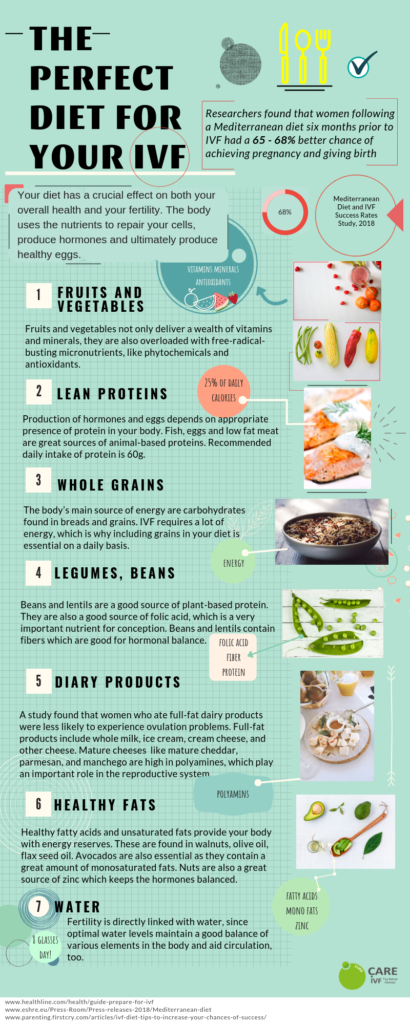 Food doesn’t guarantee implantation success. However, there are foods that can prepare your body to respond better to the embryo transfer. Here is a list of foods and nutrients that can help you achieve an IVF success:
1. Zinc
Hormones regulate the reproductive process in your body. Any change in your hormonal levels could cause your reproductive organs to stop working properly. Zinc helps maintain normal hormone levels. You can ensure that you meet your daily requirement of around 15mg of zinc by using zinc supplements and foods that are rich in zinc including dairy products, grains, nuts, and meat.3. Folic Acid
Folic acid ensures that the embryo is developing normally after the transfer. Foods such as peas, spinach, broccoli, kiwi, poultry products, and tofu are a great source of folic acid.2. Carbohydrates
Carbohydrates are an excellent source of energy. As you will need a lot of energy during the IVF process, including fruits and grains in your diet on a daily basis will provide extra energy for your body.4. Fats
Choose foods that contain healthy fatty acids and unsaturated fats. These will provide your body with enough energy reserves and will help build many fetal organs and the placenta. Healthy fats are found in walnuts, corn, olive oil, flax seed oil, and more.5. Avocados
Avocados contain plenty of monounsaturated fats, which are especially helpful in preventing developmental abnormalities during pregnancy. Moreover, avocados contain folate, potassium, and vitamin A, which all improve the reproductive health of a woman.6. Proteins
Proteins affect the production of hormones in your body. Generally, it is recommended to have at least 60g of lean proteins on a daily basis. Foods such as meat, eggs, legumes, and nuts are great sources of proteins.7. Water
Drink plenty of water to improve circulation and ensure a normal function of the reproductive organs. The recommended water intake varies from person to person. Your water intake is adequate if:- You rarely feel thirsty;
- Your urine is colorless or light yellow.
Symptoms of Pregnancy After Embryo Transfer in IVF
The first signs of successful implantation and pregnancy generally appear in the first two weeks after the embryo transfer. A woman might notice some physical symptoms that indicate a possible pregnancy including swollen breasts, headaches, nausea, mood changes, etc. Due to increased hormone levels, a woman may have sore or tender breasts. The rise in female hormones can also cause headaches or mood swings during the first few weeks. A woman might also experience nausea or morning sickness.Supported at every step
Every EuroCARE cycle includes direct access to our medical team after your transfer — you’re never left guessing about a symptom. See how the full IVF process in Cyprus works, or book a free consultation.
IVF from
success rates up to
waiting lists
treated up to age
What Happens Next If Implantation Occurs
Twelve days after the embryo transfer, a beta hCG test is scheduled to check whether pregnancy has occurred. A positive pregnancy test is an exciting moment for all future patients. Even after a successful pregnancy has been confirmed, the patient will continue her progesterone support in the first few weeks of pregnancy. Several factors will influence our doctor’s decision as to how long the hormonal support will take including age, reproductive health and quality and number of embryos. The first ultrasound scan is done to determine how many embryos have implanted and if there is a heartbeat. A second ultrasound ensures that the embryos are growing and developing properly.IVF Pregnancy
 An IVF pregnancy is no different than a pregnancy established through natural conception. Every pregnancy and journey to motherhood is unique, no matter how the baby is conceived. In the time of pregnancy, you may be feeling tired, nauseated, fatigued, and moody. It is also possible that you do not have any of these physical symptoms. Cramping and light bleeding may occur, which may be a good sign. Breast soreness or tenderness are also quite common, although none of these symptoms can give you an exact answer as to whether the embryo transfer was successful. A beta hCG two weeks post transfer will reveal if the pregnancy was achieved.
Embryo Transfer in IVF at EuroCARE IVF
Embryo transfer is the last step of the IVF process. The embryo transfer procedure may be both exciting and stressful for many patients as a new phase of their journey to parenthood is about to start. Common physical symptoms post transfer include minor spotting, bleeding, and even mild cramping. We understand that this can be confusing for many patients. Having any of these symptoms does not necessarily mean that something is wrong and that you might not get pregnant. They can actually be a positive sign that the implantation process is going well. However, if you experience severe bleeding or cramping or other uncommon symptoms during the first two weeks after the transfer, you should immediately report the issue to our EuroCARE IVF doctor.“Total satisfaction — everything went well on the first try and we have a beautiful little girl. The staff were pleasant, helpful and professional. I can only recommend.”
— Jan, EuroCARE patient
Keep reading:
Worried about a symptom, or planning your next steps?
EuroCARE patients can reach our medical team directly at any stage — and if you’re considering treatment, our coordinators are happy to talk it through. IVF in Cyprus from €3,300.