

Donor Egg IVF Success Rates
IVF with donor eggs has the highest success rates of any fertility treatment, because your chances depend mainly on the age of the egg donor, not your own. At EuroCARE, our verified 2024 success rate for IVF with egg donation was 75%. Here is what that means for you, how age affects your chances, and how to give your cycle the best possible start.
Medically reviewed by Dr. Yucel Inan, Lead Fertility Specialist · Updated October 2026
EuroCARE Families: Real Stories, Real Babies
Every photo represents a family that started their journey right where you are now.



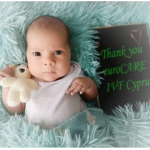


Photos shared with patient consent
How Successful Is IVF With Donor Eggs?
IVF with donor eggs has the highest success rates of any fertility treatment. In 2024, EuroCARE’s verified success rate for IVF with egg donation was 75%, compared with 65% for IVF with own eggs in patients under 37.
The reason is simple: egg quality is what declines most with age. Donor eggs come from young, healthy, carefully screened women, so your embryos have the quality of a young donor’s eggs, whatever your own age. That is why donor egg success rates stay high for women in their forties and beyond, while success with your own eggs falls sharply after 40.
If you are considering egg donation in Cyprus, the figures below show how our results compare across age groups, what influences your chances, and what to expect at each step.
Donor Egg Success Rates by Age
Because success depends mainly on the donor’s age, results with donor eggs stay remarkably consistent as recipients get older.
| Your Age | Success Rate With Donor Eggs | What This Shows |
|---|---|---|
| 20–29 | 80% | Success is driven by the donor’s egg quality |
| 30–34 | 80% | No drop in success with age |
| 35–39 | 79% | Virtually unchanged |
| 40–44 | 78% | Still close to the youngest group |
| 45+ | 75% | High success, even after 45 |
*EuroCARE success rates for egg donation IVF by recipient age, as published by the clinic for 2019. Our verified 2024 success rate for IVF with egg donation across all ages was 75%. Your doctor will discuss your personal chances at your consultation.
What Affects Your Chances of Success With Donor Eggs?
Donor egg IVF starts from a strong position, but several factors still influence your individual chances.
1. Donor Age and Screening
Our donors are young, healthy women who are medically screened before they are accepted. The quality of their eggs is the single biggest reason donor egg IVF is so successful.
2. Embryo Quality
Embryos are cultured to the blastocyst stage in our on-site lab, so the strongest embryo can be chosen for transfer. Optional PGT-A testing can also screen embryos for chromosomal health.
3. Your Uterus and Lining
A healthy, well-prepared uterine lining is essential for implantation. Conditions such as fibroids or polyps are checked for, and treated before transfer where needed.
4. Sperm Quality
Sperm quality also matters. ICSI, included in every cycle at EuroCARE, places a single sperm into each egg to maximize fertilization.
5. Your General Health
Weight, smoking, blood pressure and thyroid function can all affect implantation and pregnancy. Small changes before treatment can improve your chances.
6. Number of Embryos Transferred
Transferring a single good-quality embryo gives excellent success rates while greatly reducing the risks of a twin pregnancy. Your doctor will advise on the right approach for you.
Want to know your personal chances with donor eggs?
We respond to all enquiries within 2 business hours.
Your Donor Egg IVF Journey, Step by Step
From your first consultation to your pregnancy test, here is what a typical donor egg cycle at EuroCARE involves.
Free Consultation and Tests
Your journey begins with a free virtual consultation and a few simple tests to check your health and your uterus, so your doctor can plan your treatment.
Matching With Your Donor
You are matched with an anonymous, screened donor based on your physical characteristics. Your donor remains anonymous, now and in the future.
Preparing Your Lining
You take estrogen to prepare your uterine lining, timed to your donor’s cycle, while your donor completes her stimulation.
Egg Collection and Fertilization
Your donor’s eggs are collected and fertilized with your partner’s sperm or donor sperm using ICSI. The embryos then develop in our on-site lab.

Embryo Transfer
The best embryo is transferred, usually at the blastocyst stage around day five. The procedure is quick and comfortable for most patients.
Pregnancy Test
Your pregnancy test takes place 12 days after transfer. Any remaining good-quality embryos can be frozen for a future transfer.
When Should You Consider Donor Eggs?
Donor eggs are not the first step for everyone. These are the situations where they most often give you the best chance of a baby.
1. Low Ovarian Reserve
If tests show a very low AMH or few remaining eggs, donor eggs can offer a far better chance of pregnancy than repeated cycles with your own eggs.
2. Age Over 40
Egg quality declines sharply after 40. Many women in their early-to-mid forties, and most women over 45, have significantly higher chances with donor eggs.
3. Repeated Failed IVF
If two or three cycles with your own eggs have not worked because of poor egg or embryo quality, donor eggs are often the most effective next step.
4. Early Menopause
Premature ovarian insufficiency or early menopause means your own eggs are no longer available, but pregnancy with donor eggs is still possible.
5. Genetic Conditions
If you carry a genetic condition you do not want to pass on, using donor eggs can avoid passing it to your child.
Donor Eggs vs Your Own Eggs: How Success Compares
Your own eggs remain the right choice for many patients. Here is how the two options compare.
1. If You Are Under 37
With your own eggs, our verified 2024 success rate for patients under 37 was 65%. For many younger patients with a healthy ovarian reserve, IVF with your own eggs is the natural first choice.
2. If You Are Over 40
Success with your own eggs falls sharply after 40, while donor egg success stays close to that of the youngest patients: 78% for women aged 40–44 and 75% for women over 45 in our published figures.
3. Fewer Cycles Overall
Because each donor egg cycle has a high chance of success, many patients need fewer cycles overall, which can mean less time, less stress and a lower total cost.
IVF Prices by Treatment at EuroCARE
Starting prices for every treatment we offer. Your free consultation ends with a fully itemized quote for your exact protocol.
From €3,300 — ICSI included
From €5,700 — anonymous donors
From €5,700 — 99%+ accuracy
Personalized quote — up to age 56
Personalized quote — own + donor eggs
Personalized quote — lower stimulation
From €5,700 — legal via PGT-A
Personalized quote — certified donors
Have questions about donor egg IVF?
We respond to all enquiries within 2 business hours.
Is Donor Egg IVF Safe?
Donor egg IVF is a well-established and safe treatment. For you as the recipient, the process itself is straightforward: there is no ovarian stimulation or egg collection, only medication to prepare your lining and a quick embryo transfer.
The main risks relate to pregnancy itself, particularly for women over 45, and include higher blood pressure, pre-eclampsia and gestational diabetes. Before treatment, your doctor will review your health and may recommend extra checks to make sure pregnancy is safe for you. Transferring a single embryo also avoids the added risks of a twin pregnancy.
For donors, stimulation and egg collection are carefully monitored to minimize risks such as ovarian hyperstimulation syndrome (OHSS).
Your Care Team & Clinical Standards
When you travel abroad for fertility treatment, you deserve to know exactly who is caring for you and what standards your clinic meets. At EuroCARE, clinical excellence is not a marketing claim — it is the foundation of everything we do.

Dr. Yucel Inan
Lead Fertility Specialist
20+ Years Experience
Dr. Yucel leads EuroCARE’s medical team with extensive experience in reproductive medicine and IVF. His personalised approach to treatment — particularly for complex cases and patients over 40 — is reflected in the clinic’s consistently high success rates and the deeply personal testimonials patients leave about their experience under his care.
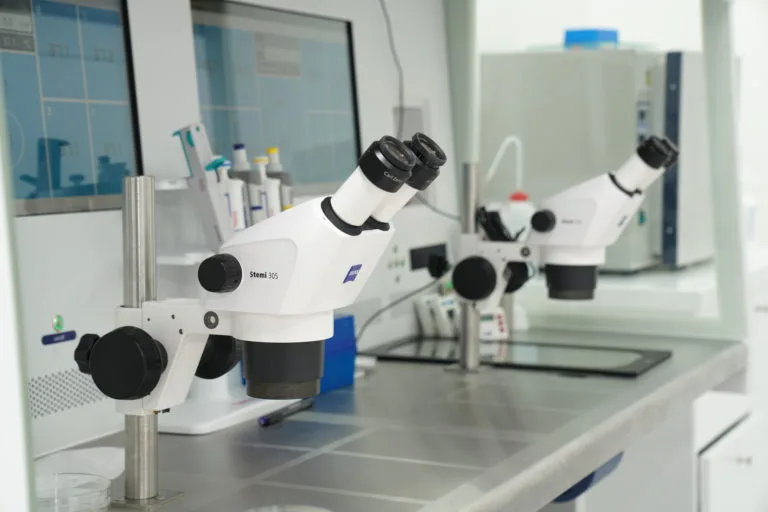
Advanced Embryology Laboratory
EuroCARE’s laboratory is equipped with the same technology used in leading European and North American fertility clinics. Our embryology capabilities include ICSI microinjection for all cycles, vitrification for embryo and egg freezing, PGT-A genetic testing and screening, and laser-assisted hatching. Every protocol follows internationally recognised evidence-based standards.
Coordinator Availability
Response Time
Regulated & Inspected
Real Stories from EuroCARE Families

“Sherry was my point of contact and she was absolutely amazing. All the staff were attentive, supportive and really friendly. I had a positive pregnancy test two weeks after insemination and had twins — a boy and a girl — in March. I have nothing but glowing reviews for EuroCARE IVF. Very supportive, very informative, and a fraction of the price compared to the UK.”
— Amber, UK Patient

“I cannot thank Dr. Yucel and his team enough for making our dreams come true! Lyndsay is a coordinator like no other — friendly, kind, knowledgeable, and prompt. Without her, nothing would have been possible. My journey wasn’t easy and I had to do a few rounds of IVF to get my princess, but we never gave up. Each time, Dr. Yucel, Lyndsay and the team discussed different options with us. The clinic is lovely and clean, everyone makes you feel at ease, and I can say EuroCARE IVF is top when it comes to fertility centres. This is our 4th child and we are now complete. My heart is full.”
— Tanya, UK Patient

“Total satisfaction — everything went well on the first try and we have a beautiful little girl. The staff were pleasant, helpful and professional. The smaller, family-like environment of the clinic was great — they have time to take care of you. I can only recommend.”
— Jan, Czech Patient
Frequently Asked Questions — Donor Egg IVF Success Rates
EuroCARE’s verified 2024 success rate for IVF with egg donation was 75%. Because success depends mainly on the donor’s age, rates stay high across all recipient age groups.
Very high. In EuroCARE’s published figures, women aged 40–44 had a 78% success rate with donor eggs, close to the 80% seen in women under 35. See IVF over 40 for more on your options.
Donor egg IVF remains highly successful after 45, with a 75% success rate in our published figures. We offer treatment up to age 56, subject to a health assessment.
Yes. Many patients become pregnant on their first donor egg cycle, because each cycle uses high-quality eggs from a young donor. If it does not work the first time, frozen embryos from the same cycle may allow another transfer without a new donor cycle.
With success rates of around 75% per cycle, many patients succeed within one or two cycles. Your doctor will review your history and explain your personal chances at consultation.
There is no fixed number. Many fertility specialists suggest considering donor eggs after two or three unsuccessful cycles with your own eggs, especially when egg or embryo quality has been poor or you are over 40. Your doctor will help you decide.
Often, yes. When poor egg quality is the main barrier, donor eggs from a young, screened donor usually offer a much higher chance of success than further cycles with your own eggs.
Double donation, using both donor eggs and donor sperm, generally has success rates similar to donor egg IVF, because both come from young, screened donors.
Your donor is matched to your physical characteristics, and your baby grows and develops in your womb. Read more: Donor egg IVF: will the baby look like me?
Egg donation IVF at EuroCARE starts from €5,700, with your donor’s medication included. See the cost of egg donation in Cyprus and our full guide to IVF cost in Cyprus.
Donors are anonymous, and you are matched based on your physical characteristics. Find out more about choosing your egg donor.
Book a free consultation. After reviewing your history and test results, your doctor will explain your personal chances with donor eggs and recommend the best treatment plan for you.
Medically Reviewed by Dr. Yucel Inan
This page was medically reviewed by Dr. Yucel Inan, Lead Fertility Specialist at EuroCARE IVF, for medical accuracy. Success rates shown are EuroCARE’s published figures; your doctor will discuss your personal chances at consultation. Last reviewed: October 2026.