

IVF Over 40 in Cyprus
Treatment Up to Age 56
at EuroCARE IVF
Most European clinics won’t treat you past 42. Many won’t even consider you after 40 with your own eggs. At EuroCARE IVF in North Cyprus, we treat women up to age 56 — because we believe your age shouldn’t end your chance of becoming a mother. Whether with your own eggs, donor eggs, or a combination of both, we’ll find the approach that gives you the best possible chance.

"You're Too Old for IVF" — We Hear This from Nearly Every Patient Who Comes to Us
If you're reading this page, chances are a doctor, a clinic, or a website has told you that your fertility window has closed. That your eggs are too old. That your chances are too low. That you should "consider other options."
We hear this story every week — from women in their early 40s turned away by NHS clinics with rigid age cutoffs, from women in their mid-40s told by private clinics that they won't treat them, from women approaching 50 who've been told it's simply impossible.
It isn't always impossible. The truth is more nuanced than a blanket "no." Your chances do change with age — and we'll be completely honest with you about what those chances look like in your specific situation. But for many women over 40, pregnancy is still achievable with the right clinic, the right approach, and honest medical guidance. That's what EuroCARE provides.EuroCARE Families: Real Stories, Real Babies
Every photo represents a family that started their journey right where you are now.



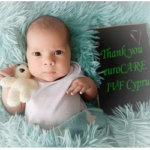


Photos shared with patient consent
IVF Over 40 — Your Realistic Options by Age
We don’t believe in giving you false hope — and we don’t believe in taking away hope that’s justified. Here is an honest breakdown of what to expect at each age, and which treatment approach gives you the best chance.
Age 40–42 — Own Eggs Are Still a Strong Option
At 40–42, many women still have viable ovarian reserve. Egg quantity is declining but egg quality can still be sufficient to produce healthy embryos. EuroCARE recommends starting with your own eggs at this age, supported by an optimised stimulation protocol designed to maximise egg yield.
What to expect: A typical cycle may produce 4–8 eggs, with 2–4 reaching blastocyst stage. PGT-A screening is strongly recommended at this age because the rate of chromosomal abnormalities increases significantly after 40 — testing ensures only healthy embryos are transferred, reducing miscarriage risk and improving live birth rates per transfer.
If own eggs don’t produce enough embryos: Tandem IVF (your eggs + donor eggs in the same cycle) or a full switch to egg donation may be discussed. But the first step is to try with your own eggs and see what your body produces.
Age 43–45 — Own Eggs Possible, Egg Donation Recommended
Between 43 and 45, ovarian reserve drops significantly for most women. The number of eggs retrieved per cycle decreases, and a higher percentage of embryos carry chromosomal abnormalities. Some women in this age group still conceive with their own eggs — but the probability is lower, and multiple cycles may be needed.
What to expect: A typical cycle may produce 2–5 eggs, with 1–2 reaching blastocyst. After PGT-A screening, it’s possible that no embryos pass — which means the cycle doesn’t result in a transfer. This is emotionally and financially difficult, and we discuss it openly before you begin.
Our recommendation: For most patients in this age group, egg donation or Tandem IVF gives significantly better chances. Young donor eggs (typically from women aged 20–30) produce more embryos, more pass PGT-A, and pregnancy rates rise to up to 80%+. If using your own eggs is important to you, we support that — but we’ll be honest about the odds.
Age 45–50 — Egg Donation Is the Primary Path
After 45, the chance of a successful pregnancy with your own eggs drops below 5% at most clinics. The vast majority of embryos at this age carry chromosomal abnormalities, and producing even one healthy blastocyst becomes unlikely. Most clinics in the UK and Europe stop treating women entirely at this point.
At EuroCARE, we don’t stop. Egg donation is the recommended approach for women 45–50, and it works. Because the embryo’s health is determined by the egg donor’s age (not yours), success rates with donor eggs remain strong regardless of whether you’re 45, 47, or 50. Your uterus can carry a healthy pregnancy well beyond the age when your ovaries stop producing viable eggs.
What to expect: A donor egg cycle produces 10–15 eggs, yielding multiple blastocysts. With PGT-A screening, you’ll typically have several healthy embryos to choose from — and pregnancy rates of up to 80%+. Donor egg IVF at EuroCARE starts from €5,700.
Age 50–56 — Treatment Available with Medical Clearance
EuroCARE treats women up to age 56 using donor eggs, subject to individual medical assessment. Before treatment at this age, you’ll need clearance from a cardiologist and an internal medicine specialist to confirm you are fit for pregnancy. This is a safety requirement, not a barrier — most healthy women in their early 50s pass without issues.
Why most clinics won’t treat you: The age limits at UK and European clinics are typically 42–45 — not because pregnancy is medically impossible, but because those clinics’ protocols and success rate reporting frameworks don’t accommodate older patients. At EuroCARE, we’ve treated hundreds of patients in their late 40s and early 50s successfully.
What to expect: The treatment protocol is the same as donor egg IVF at any age — the difference is the additional medical screening. If you’re healthy and cleared, your chances with donor eggs are comparable to a woman in her 40s using the same donor.
Own Eggs, Egg Donation, or Both? Understanding Your Treatment Options
The single most important decision in IVF over 40 is whether to use your own eggs, donor eggs, or a combination. Here’s what each option involves and when each makes sense.
IVF with Own Eggs
Best for: Women 40–43 with adequate ovarian reserve (AMH > 1.0 ng/mL, antral follicle count > 5)
How it works: Standard IVF cycle — stimulation, egg retrieval, ICSI, embryo culture. PGT-A screening recommended to identify chromosomally healthy embryos.
Realistic expectation: Fewer eggs than younger patients, fewer blastocysts, higher chance of no embryos passing PGT-A. Multiple cycles may be needed.
Cost: From €3,100
Egg Donation IVF
Best for: Women 40+ with low ovarian reserve, women 43+, women who’ve had failed IVF cycles, women 45–56
How it works: Eggs from a young, anonymous donor (age 20–30) are fertilised with your partner’s sperm. The resulting embryos are yours. Donor identity is never disclosed.
Realistic expectation: 10–15 eggs per cycle, multiple blastocysts, high PGT-A pass rate. Pregnancy rates up to 80%+ because embryo quality is determined by the donor’s age, not yours.
Cost: From €5,700
Tandem IVF
Best for: Women 40–45 who want to try their own eggs but want a safety net. The emotional middle ground.
How it works: Your eggs and a donor’s eggs are retrieved and fertilised in the same cycle. You get embryos from both sources. If your own eggs produce a healthy embryo, that can be transferred first. If not, donor embryos are ready.
Realistic expectation: Combines the emotional benefit of trying with your own eggs with the statistical safety of donor eggs. Reduces the risk of a “failed” cycle.
Cost: Contact for quote
Your coordinator helps you decide which option is right for your situation during your free consultation. The decision isn’t always obvious — AMH levels, antral follicle count, previous IVF history, and personal priorities all play a role. We give you the information; you make the decision.
Ready to start your gender selection journey?
We respond to all enquiries within 2 business hours.
IVF Success Rates Over 40 — Honest Numbers
We don’t hide behind vague claims. Here are realistic success rates for IVF at EuroCARE based on treatment type. Individual results depend on age, ovarian reserve, embryo quality, and overall health.
| Treatment | Age 40–42 | Age 43–45 | Age 45–50 | Age 50–56 |
|---|---|---|---|---|
| IVF with Own Eggs | Moderate | Lower | Very low | Not recommended |
| Egg Donation IVF | Up to 80%+ | Up to 80%+ | Up to 80%+ | Up to 80%+ |
| Tandem IVF | Strong | Strong | Strong | Case-by-case |
| Available at EuroCARE? | ✅ All options | ✅ All options | ✅ Donor / Tandem | ✅ Donor (with clearance) |
*Success rates are general indicators. Individual outcomes vary based on ovarian reserve, embryo quality, uterine health, and overall medical fitness. Your coordinator discusses realistic expectations during your free consultation.
Notice that donor egg IVF success rates remain consistent across all age groups. This is because the embryo’s chromosomal health is determined by the egg donor’s age — not yours. Your uterus can carry a healthy pregnancy well into your 50s. This is the fundamental reason why egg donation transforms the outlook for women over 40.
Why Most Clinics Have Age Limits — And Why EuroCARE Doesn't
If you’ve been turned away from clinics in the UK, Germany, or Scandinavia, you may be wondering why they impose age limits while EuroCARE doesn’t. The answer isn’t medical — it’s structural.
NHS and public system limits
In the UK, most NHS-funded IVF is limited to women under 42 (and often under 40, depending on the CCG). This isn’t because IVF can’t work over 42 — it’s because NHS funding criteria prioritise the highest statistical success rates per pound spent. Private UK clinics often follow similar thresholds to protect their published success statistics.
European regulatory frameworks
In Germany, France, and Scandinavia, IVF age limits are set by national regulation — typically 42–45. These limits reflect conservative legislative positions, not medical impossibility. In Germany, egg donation is also banned entirely, removing the most effective treatment option for older patients.
Why EuroCARE operates differently
North Cyprus regulates fertility treatment through the Ministry of Health under legislation that explicitly allows treatment for women up to age 56. There is no artificial age cap designed to protect clinic statistics. EuroCARE’s approach is patient-centred: if you’re medically fit for pregnancy and you understand the realistic chances for your age and treatment type, the decision is yours.
This doesn’t mean we treat everyone indiscriminately. Dr. Yucel assesses every patient individually. If he believes treatment is unlikely to succeed, he’ll tell you — honestly and compassionately. But “unlikely” is different from “impossible,” and “difficult” is different from “we won’t try.”
Egg donation at EuroCARE is fully anonymous. You receive a comprehensive donor profile — physical characteristics, ethnic background, education, and health history — but donor identity is never disclosed. This differs from the UK (anonymity removed 2005) and France (anonymity removed 2025).
Why PGT-A Testing Matters More After 40
After age 40, the rate of chromosomal abnormalities in embryos rises sharply. By 42, approximately 60–70% of embryos carry an abnormal number of chromosomes. By 44, that figure can exceed 80%. These abnormal embryos are the leading cause of implantation failure, miscarriage, and conditions like Down syndrome.
PGT-A (Preimplantation Genetic Testing for Aneuploidy) solves this problem by screening every embryo before transfer. Only embryos with a normal chromosome count are transferred — dramatically reducing miscarriage risk and increasing the chance of a healthy live birth per transfer.
For women over 40, PGT-A transforms the equation: Without PGT-A, you may transfer an embryo that looks healthy under the microscope but carries a fatal chromosomal abnormality — resulting in a failed cycle or a miscarriage weeks later. With PGT-A, every transferred embryo has been confirmed as chromosomally normal. This doesn’t guarantee pregnancy, but it eliminates the most common reason for failure.
At EuroCARE, PGT-A uses next-generation sequencing (NGS) technology, screening all 23 chromosome pairs. The same test also identifies embryo gender — so if you want to combine IVF over 40 with gender selection, PGT-A accomplishes both in a single test.
IVF Over 40 — Cost at EuroCARE
Cost is a major factor for patients considering IVF over 40 — especially when multiple cycles may be needed. Here’s how EuroCARE compares.
| Treatment | EuroCARE Cyprus | UK Private | Germany | USA |
|---|---|---|---|---|
| IVF (own eggs) | From €3,100 | £5,000–£8,000 | €4,000–€7,000 | $15,000–$25,000 |
| Egg Donation IVF | From €5,700 | £8,000–£13,000 | Banned | $25,000–$40,000 |
| Tandem IVF | Contact for quote | Rarely offered | N/A | Varies |
| Max Treatment Age | 56 | 42–45 | 42–45 | No legal limit |
| Egg Donation | ✅ Anonymous | Non-anonymous | ❌ Banned | ✅ Available |
*Prices are indicative. Contact us for a personalised quote.
For patients over 40 considering multiple cycles, EuroCARE’s pricing makes a critical difference. Two IVF cycles at EuroCARE cost less than a single cycle at most UK private clinics — giving you more attempts within the same budget. When age is working against you, having the financial ability to try more than once can be the difference between success and giving up.
Ready to explore what's possible at your age?
Your Care Team for IVF Over 40
IVF over 40 requires a specialist who understands the nuances of age-related fertility decline — not a clinic that applies the same protocol to every patient regardless of age.

Dr. Yucel Inan
Lead Fertility Specialist
20+ Years Experience
Dr. Yucel personally oversees every gender selection cycle at EuroCARE, from protocol design through embryo transfer. His experience with PGT-A cases — including complex scenarios involving low ovarian reserve, repeated IVF failure, and patients over 45 — is reflected in the clinic’s outcomes and the deeply personal testimonials patients share.

PGT-A & Embryology Laboratory
EuroCARE’s lab is equipped with ICSI microinjection, PGT-A via next-generation sequencing (NGS), vitrification, and laser-assisted hatching. For patients over 40, PGT-A screening is particularly critical — it identifies chromosomally healthy embryos before transfer, reducing miscarriage risk and maximising the chance of a healthy pregnancy per attempt.
80%+
7 Days
Coordinator Availability
2 Hrs
Response Time
MoH
Regulated & Inspected
Real Stories from EuroCARE Families

“Sherry was my point of contact and she was absolutely amazing. All the staff were attentive, supportive and really friendly. I had a positive pregnancy test two weeks after insemination and had twins — a boy and a girl — in March. I have nothing but glowing reviews for EuroCARE IVF. Very supportive, very informative, and a fraction of the price compared to the UK.”
— Amber, UK Patient

“I cannot thank Dr. Yucel and his team enough for making our dreams come true! Lyndsay is a coordinator like no other — friendly, kind, knowledgeable, and prompt. Without her, nothing would have been possible. My journey wasn’t easy and I had to do a few rounds of IVF to get my princess, but we never gave up. Each time, Dr. Yucel, Lyndsay and the team discussed different options with us. The clinic is lovely and clean, everyone makes you feel at ease, and I can say EuroCARE IVF is top when it comes to fertility centres. This is our 4th child and we are now complete. My heart is full.”
— Tanya, UK Patient

“Total satisfaction — everything went well on the first try and we have a beautiful little girl. The staff were pleasant, helpful and professional. The smaller, family-like environment of the clinic was great — they have time to take care of you. I can only recommend.”
— Jan, Czech Patient
Frequently Asked Questions — IVF Over 40
Yes. EuroCARE treats women up to 56. Options include own eggs (typically 40–43), egg donation (any age up to 56), and Tandem IVF (combination of both). Your coordinator assesses your individual situation during a free consultation.
With own eggs, success rates decline significantly after 40 and drop further after 43. With donor eggs, pregnancy rates remain up to 80%+ regardless of your age because embryo health is determined by the donor’s age, not yours. Individual outcomes depend on ovarian reserve, embryo quality, and overall health.
The best clinic for IVF over 40 offers treatment without arbitrary age limits, honest guidance about own eggs vs egg donation, PGT-A screening for chromosomal health, and experienced specialists in age-related fertility. EuroCARE treats women up to 56, offers all three treatment options (own eggs, donor, Tandem), and provides personalised protocols rather than age-based cutoffs.
NHS and public systems cap treatment at 42–45 to prioritise funding for higher-success demographics. Private clinics often follow similar thresholds to protect published success rates. In North Cyprus, legislation allows treatment up to 56, and EuroCARE assesses patients individually rather than applying blanket cutoffs.
Tandem IVF combines your own eggs and donor eggs in the same cycle. Both are fertilised and cultured. If your own eggs produce a healthy embryo, that can be transferred first. If not, donor embryos are available as a safety net. It’s the emotional middle ground for patients who want to try with their own eggs but want backup.
Natural conception at 45 is possible but statistically rare — less than 1% chance per cycle. The primary barrier is egg quality. IVF with PGT-A screening or egg donation dramatically improves the odds by either identifying the rare healthy embryo or using young donor eggs.
IVF with own eggs starts from €3,100. Egg donation IVF starts from €5,700. Even including flights and accommodation, most patients save 50–60% compared to UK private clinics. Your coordinator provides a personalised cost estimate during your free consultation.
Yes. Women over 50 require clearance from a cardiologist and internal medicine specialist to confirm fitness for pregnancy. Most healthy women in their early 50s pass without issues.
PGT-A screens embryos for chromosomal abnormalities before transfer. After 40, 60–80%+ of embryos carry abnormal chromosomes. PGT-A ensures only chromosomally healthy embryos are transferred, reducing miscarriage risk and increasing live birth rates per transfer.
Most patients stay 8–10 days. Stimulation medication is taken at home before you travel. If embryos are frozen for PGT-A testing, you return for a 3–4 day frozen transfer visit.
Book a free virtual consultation through our website or contact us via WhatsApp. Your coordinator will discuss your medical history, goals, treatment options, expected timeline and costs — with no obligation. From initial consultation to treatment start is typically 4–6 weeks.
Related Treatments at EuroCARE
Gender selection is often combined with other treatments depending on your age and individual situation.