

Gender Selection in Cyprus
For many families, the dream isn’t just to have a child — it’s to complete their family the way they’ve always imagined. Whether you’re hoping for a daughter after three sons, a son after two daughters, or simply want the choice that nature doesn’t offer, gender selection via PGT-A at EuroCARE IVF makes it possible safely, and affordably.
Yes — Gender Selection Is Available in North Cyprus
EuroCARE IVF offers gender selection via PGT-A openly and with full regulatory compliance. In addition to screening for specific genetic conditions, PGT can determine the chromosomal sex (XX or XY) of embryos. Depending on the reason for treatment and local regulations, this information may be used to avoid certain inherited conditions or, in appropriate circumstances, for family balancing.
Gender selection for non-medical reasons is banned in the UK, Germany, France, Sweden, Norway, Denmark, Spain, Greece and most of Europe.
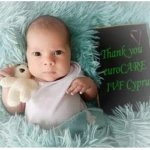
EuroCARE Families: Real Stories, Real Babies





Understanding PGT-A — Genetic Screening That Also Reveals Gender
Gender Selection Methods Compared — Why EuroCARE Uses PGT-A
PGT-A (Preimplantation Genetic Testing)
MicroSort Sperm Sorting
Accuracy: 70–90%
Separates sperm by X and Y chromosomes before fertilisation. Approximately 90% accurate for female selection and 70% for male. Does not screen for genetic conditions.
Lower accuracy means you may still need PGT-A to confirm gender — adding cost and complexity.
Ericsson Method
Accuracy: 60–75%
An older sperm-separation technique using albumin filtration. Significantly less accurate than PGT-A or MicroSort. Not recommended by most modern fertility specialists and not offered at EuroCARE.
Essentially a coin flip with marginally better odds. Not suitable for patients who need certainty.
The terminology can be confusing. PGD (Preimplantation Genetic Diagnosis) and PGS (Preimplantation Genetic Screening) are older terms that have been replaced by PGT-A and PGT-M under international nomenclature. If you see a clinic advertising “PGD gender selection,” they are referring to the same underlying genetic testing — the modern standard name is PGT-A.
How Gender Selection Works at EuroCARE — Step by Step
Gender selection requires IVF treatment regardless of your natural fertility. Here is exactly what happens at each stage, so you know what to expect before you commit.
Free Consultation & Treatment Planning
Your journey begins with a free virtual consultation with a dedicated patient coordinator. You’ll discuss your medical history, your goals, and your timeline. Your coordinator will explain the process, answer your questions honestly, and provide a detailed cost estimate. No obligation, no pressure.
Pre-Treatment Tests at Home
Ovarian Stimulation — Medication at Home (8–12 Days)
You’ll self-administer hormone injections at home over 8–12 days to stimulate your ovaries to produce multiple eggs. Your coordinator monitors your progress remotely via scan results from your local clinic. The goal is to produce as many healthy eggs as possible — more eggs means more embryos to test, which increases the chance of having healthy embryos of your desired gender.
Medications used: Typically a combination of FSH (follicle-stimulating hormone) and an antagonist protocol to prevent premature ovulation. The exact protocol is tailored to your age, AMH levels, and ovarian response. Medication costs range from €300–€1,500 depending on the dosage required.
Common side effects: Mild bloating, tenderness at injection sites, mood fluctuations. These are temporary and resolve after egg retrieval. Your coordinator is available 7 days a week to answer questions during stimulation.
Travel to Cyprus & Egg Retrieval

Fertilisation via ICSI & Embryo Development
Egg retrieval under sedation, fertilisation using ICSI, embryo development monitoring, and embryo transfer — all during your stay. PGT-A testing if selected.
PGT-A Biopsy & Gender Identification
Embryo Selection & Transfer
Fly Home & Pregnancy Test
Ready to start your gender selection journey?
We respond to all enquiries within 2 business hours.
Gender Selection Cost — How EuroCARE Compares
One of the first questions every patient asks. Here is a transparent comparison of what gender selection costs at EuroCARE versus your other options.
| Factor | EuroCARE Cyprus | USA | Other Cyprus Clinics | UK |
|---|---|---|---|---|
| Gender Selection (IVF + PGT-A) | From €5,700 | $20,000–$30,000 | €6,000–€8,600 | Not legal |
| Gender Selection + Egg Donation | Contact for quote | $30,000–$50,000 | €8,000–€12,000 | Not legal |
| PGT-A Accuracy | 99%+ (NGS) | 99%+ | Varies (70–99%) | N/A |
| Waiting List | None — 4–6 weeks | Varies | Varies | N/A |
| Native Language Coordinator | ✅ Included | ✅ | Varies | N/A |
*Prices are indicative. Contact us for a personalised quote based on your treatment plan.
What's Included in the €5,700
✓ Included
All medical consultations with Dr. Yucel, personalised treatment protocol and medical coordination, monitoring and ultrasounds at EuroCARE, egg retrieval with anaesthesia, ICSI fertilisation, biopsy and PGT testing on Day 3 for up to 15 embryos, assisted hatching, embryo transfer procedure, post-transfer follow-up, and a dedicated coordinator from first contact through pregnancy confirmation.
⊘ Not Included
Your coordinator provides a personalized cost estimate during your free consultation based on your age, medical history, and treatment plan. No hidden fees, no surprises on arrival. Even including flights and accommodation, most patients save 50–70%.
Gender Selection with Egg Donation:
For Patients Over 40
If you are over 40, have low ovarian reserve, or have experienced previous IVF failures, combining gender selection with egg donation significantly improves your chances. This is one of EuroCARE’s most requested treatment combinations, and understanding why it works is important.
Why Age Matters for Gender Selection
Gender selection requires enough healthy embryos to have options. With your own eggs, the number of embryos that reach blastocyst stage — and pass PGT-A screening — decreases with age. A 32-year-old might produce 10 eggs, yield 6 blastocysts, and have 4 pass PGT-A — giving a strong chance of having healthy embryos of both genders to choose from. A 42-year-old might produce 4 eggs, yield 2 blastocysts, and have 1 pass PGT-A — which may or may not be the desired gender.
How Egg Donation Changes the Equation
Egg donors at EuroCARE are young women (typically 20–30) who produce significantly more eggs per cycle. With donor eggs, you’re working with the egg quality and quantity of a younger woman — which means more embryos, more passing PGT-A, and a much higher chance of having multiple healthy embryos of your desired gender to choose from. The pregnancy success rate also increases to up to 80%+ because the embryo is chromosomally normal.
Under 35 — Own Eggs
Typically the best outcomes with own eggs. Higher egg count, higher fertilisation rate, more embryos reaching blastocyst. Strong chance of having healthy embryos of both genders. EuroCARE recommends own eggs as the first approach for patients in this age group.
35–39 — Own Eggs (Case-by-Case)
40–45 — Egg Donation Recommended
45–56 — Egg Donation Required
Egg donation at EuroCARE is fully anonymous. You receive a comprehensive donor profile — physical characteristics, ethnic background, education, and health history — but donor identity is never disclosed. This differs from the UK (anonymity removed 2005) and France (anonymity removed 2025).
Where Is Gender Selection Legal in Europe?
Gender selection for family balancing is banned across almost all of Europe. This single legal reality is the primary reason international patients travel to North Cyprus for treatment.
| Country | Gender Selection via PGT-A | Key Restrictions |
|---|---|---|
| North Cyprus | ✅ Available | Available at EuroCARE via PGT-A. |
| United Kingdom | ❌ Banned | Only for serious sex-linked medical conditions. HFEA regulated. |
| Germany | ❌ Banned | Embryo Protection Act prohibits embryo selection. Egg donation also banned. |
| France | ❌ Banned | PGT-A itself is banned entirely. Donor anonymity removed 2025. |
| Sweden | ❌ Banned | No non-medical gender selection. Strict IVF regulation. |
| Norway | ❌ Banned | Gender selection and egg donation both banned. |
| Denmark | ❌ Banned | Only for medical indication. |
| Spain | ❌ Banned | Anonymous egg donation allowed, but not gender selection. |
| Greece | ❌ Banned | PGT-A allowed for genetic screening, not for gender. |
| Czech Republic | ❌ Banned | PGT-A limited. Lower age limits than Cyprus. |
| USA | ✅ Legal | Available but $20,000–$30,000 per cycle. |
For patients in Europe seeking gender selection, the choice is effectively between North Cyprus (from €5,700, 4–5 hour flight) and the USA ($20,000–$30,000, 8+ hour flight). North Cyprus offers the same PGT-A technology and accuracy at a fraction of the cost, with no visa requirement for UK and EU passport holders.
Gender Selection Success Rates — What to Realistically Expect
There are two separate success metrics in gender selection, and it’s important to understand both.
PGT-A Gender Accuracy
Pregnancy Rate (Egg Donation)
Pregnancy Rate (Own Eggs)
What Affects Your Chances
The most significant factor is maternal age. Women under 35 typically produce more eggs, more embryos reach blastocyst, and a higher percentage pass PGT-A screening. This means more embryos of both genders to choose from and higher pregnancy rates per transfer.
The second factor is embryo number. Gender selection is statistically a 50/50 proposition — roughly half your embryos will be male and half female. If you produce 6 healthy embryos, you’ll likely have options. If you produce 2, you may not. This is why ovarian stimulation protocol design matters, and why egg donation becomes important for older patients.
What If No Embryos Match Your Desired Gender?
This is a real possibility and we are transparent about it. If PGT-A testing shows that all your healthy embryos are the opposite gender, you have several options:
• Transfer a healthy embryo of the other gender — a chromosomally normal embryo has the highest chance of a successful pregnancy regardless of gender.
• Freeze all embryos and attempt another stimulation cycle to produce additional embryos.
• Consider egg donation to increase embryo numbers in a future cycle.
• Take time to decide — vitrified embryos remain viable indefinitely.
Dr. Yucel discusses this scenario openly during your initial consultation so you can plan accordingly. Having realistic expectations before treatment begins is essential to making informed decisions.
Want to understand your specific chances? Let's talk.
Traveling to North Cyprus for Gender Selection
If you’ve never been to North Cyprus, here is what you need to know about the practical side of your trip.
Flights & Travel
Fly to Ercan Airport (ECN) via Istanbul from London, Manchester, and most European cities — or fly direct to Larnaca (LCA) in the south and cross to North Cyprus, about a one-hour transfer. Flight time is 4–5 hours from the UK and 3–4 hours from Germany. No visa required for UK, EU, and most international passport holders.
Accommodation
Comfortable hotels near the clinic in Nicosia range from €30–€100 per night. EuroCARE provides a list of recommended hotels with negotiated rates. Many patients stay in 3–4 star hotels within walking distance of the clinic.
Airport Transfers
During Your Stay
Your Care Team for Gender Selection
Gender selection with PGT-A requires precision at every stage — from stimulation protocol design to embryo biopsy technique to transfer. Here’s who manages your treatment at EuroCARE.

Dr. Yucel Inan
Lead Fertility Specialist
Dr. Yucel personally oversees every gender selection cycle at EuroCARE, from protocol design through embryo transfer. His experience with PGT-A cases — including complex scenarios involving low ovarian reserve, repeated IVF failure, and patients over 45 — is reflected in the clinic’s outcomes and the deeply personal testimonials patients share.

PGT-A & Embryology Laboratory
Coordinator Availability
Response Time
Real Stories from EuroCARE Families

“Sherry was my point of contact and she was absolutely amazing. All the staff were attentive, supportive and really friendly. I had a positive pregnancy test two weeks after insemination and had twins — a boy and a girl — in March. I have nothing but glowing reviews for EuroCARE IVF. Very supportive, very informative, and a fraction of the price compared to the UK.”
— Amber, UK Patient

“I cannot thank Dr. Yucel and his team enough for making our dreams come true! Lyndsay is a coordinator like no other — friendly, kind, knowledgeable, and prompt. Without her, nothing would have been possible. My journey wasn’t easy and I had to do a few rounds of IVF to get my princess, but we never gave up. Each time, Dr. Yucel, Lyndsay and the team discussed different options with us. The clinic is lovely and clean, everyone makes you feel at ease, and I can say EuroCARE IVF is top when it comes to fertility centres. This is our 4th child and we are now complete. My heart is full.”
— Tanya, UK Patient

— Jan, Czech Patient
Frequently Asked Questions — Gender Selection in Cyprus
Gender selection via PGT-A is allowed in North Cyprus under current Ministry of Health regulations.
PGT-A is over 99% accurate for identifying whether an embryo is male (XY) or female (XX). It analyses all 23 chromosome pairs using next-generation sequencing (NGS), providing both gender identification and comprehensive genetic screening in a single test. This is significantly more accurate than alternative methods like MicroSort (70–90%) or Ericsson (60–75%).
Gender selection via IVF with PGT-A starts from €5,700 at EuroCARE. This includes all consultations, egg retrieval, ICSI, embryo culture, PGT-A biopsy and NGS analysis, embryo vitrification, and frozen embryo transfer. Stimulation medications (€300–€1,500), flights, and accommodation are not included. Your coordinator provides a detailed personalised cost estimate during your free consultation.
Yes. Gender selection can be combined with egg donation at EuroCARE. This combination is particularly beneficial for women over 40 or those with low ovarian reserve. Young donor eggs produce more embryos, which means more pass PGT-A testing and more options for gender selection. Pregnancy success rates also increase to up to 80%+ with donor egg embryos. Egg donation at EuroCARE is fully anonymous.
No. First-time parents are welcome. There is no requirement to already have children of one gender. Whether your motivation is family balancing, genetic condition prevention, or personal preference, EuroCARE supports your choice without requiring justification.
Most patients stay 8–10 days for the initial visit (egg retrieval, fertilisation, and embryo development). If embryos are vitrified for PGT-A testing — which is the most common approach — you return for a shorter 3–4 day visit for the frozen embryo transfer once results are confirmed. Some patients complete everything in a single trip depending on lab timing.
This is possible, particularly when the number of embryos is limited. Gender distribution in embryos is roughly 50/50, but small sample sizes mean it’s possible for all embryos to be one gender. If this happens, your options include transferring a healthy embryo of the other gender, freezing embryos and attempting another cycle, considering egg donation to increase embryo numbers, or taking time to decide. Dr. Yucel discusses this scenario openly before treatment begins so you can plan accordingly.
No. This is a widespread misconception based on inaccurate or outdated online sources. A legislative proposal in the Republic of Cyprus (the south) was sometimes confused with North Cyprus regulations. Gender selection via PGT-A is allowed in North Cyprus. EuroCARE has performed gender selection continuously — before 2016 and after — under current Ministry of Health regulations.
You’ll self-administer hormone injections (typically FSH-based medications) for 8–12 days to stimulate your ovaries. Common side effects include mild bloating, tenderness at injection sites, and mood fluctuations — all temporary and resolving after egg retrieval. Medication costs range from €300–€1,500 depending on your required dosage. Your coordinator provides detailed injection instructions and is available 7 days a week during stimulation.
PGT-A (Preimplantation Genetic Testing for Aneuploidy) is the current international standard name for comprehensive chromosome screening — it identifies gender and screens for chromosomal abnormalities. PGD (Preimplantation Genetic Diagnosis) and PGS (Preimplantation Genetic Screening) are older terms for essentially the same technology. If you see a clinic advertising “PGD gender selection,” they are referring to genetic testing of embryos — the modern nomenclature is PGT-A. EuroCARE uses PGT-A with next-generation sequencing (NGS), which is the most advanced version of this technology.
Yes. Flying 24–48 hours after embryo transfer is safe and does not affect implantation. There is no medical evidence that air travel, cabin pressure changes, or airport security screening impact embryo implantation. Most EuroCARE patients fly home within 1–2 days of transfer.
Book a free virtual consultation through our website or contact us via WhatsApp. Your coordinator will discuss your medical history, goals, treatment options, expected timeline and costs — with no obligation. From initial consultation to treatment start is typically 4–6 weeks.
Related Treatments at EuroCARE
Gender selection is often combined with other treatments depending on your age and individual situation.