
NIPT in Cyprus — Non-Invasive Prenatal Testing
Clear Answers About Your Baby’s Health, From Week 10
NIPT reads your baby’s DNA from a simple blood sample taken from your arm — no needle near the baby, no miscarriage risk, and results you can trust from as early as the 10th week of pregnancy. At EuroCARE IVF in North Cyprus, we use the NIFTY® test, one of the most widely used non-invasive prenatal tests in the world.

EuroCARE Families: Real Stories, Real Babies
Every photo represents a family that started their journey right where you are now.





Photos shared with patient consent
What Is NIPT — and What Is NIFTY?
During pregnancy, small fragments of your baby’s DNA circulate in your bloodstream. NIPT (non-invasive prenatal testing) captures those fragments from a standard blood draw and screens them for the most common chromosome conditions — Down syndrome (trisomy 21), Edwards syndrome (trisomy 18), Patau syndrome (trisomy 13) and conditions involving the sex chromosomes.
NIFTY® is the brand of NIPT we run at EuroCARE — developed by BGI and used in millions of pregnancies worldwide. When we talk about NIPT on this page, NIFTY is the laboratory test behind it.
Who Is NIPT For?
Any pregnancy can be screened — but these are the situations where NIPT matters most.
“I Want Reassurance as Early as Possible”
First-trimester anxiety is real — especially after a long road to pregnancy. NIPT can be done from week 10, weeks before the anomaly scan, and screens with over 99% detection for Down syndrome. One blood draw, and you know where you stand.
“I’m Pregnant After IVF”
Pregnancies after fertility treatment feel too precious to leave questions open. NIPT is a natural follow-up to IVF — including cycles with PGT-tested embryos, where it confirms the result in the ongoing pregnancy. It’s equally suited to donor-egg pregnancies.
“I Want to Avoid Invasive Testing”
Amniocentesis and CVS are diagnostic — but they involve a needle into the womb and a small risk of miscarriage. NIPT carries none of that risk. For most pregnancies, a low-risk NIPT result means invasive testing is never needed at all.
How NIPT Works at EuroCARE — Step by Step
From first contact to results in hand, the process is short and simple — most of it is one visit.
Contact Us
Tell your coordinator how far along you are. If you’re at week 10 or beyond, NIPT can usually be scheduled right away.
Confirmation Scan
A quick ultrasound confirms your dates and your baby’s heartbeat, so the test is taken at the right time.
Blood Draw
A standard blood sample from your arm — the same as any routine blood test. Nothing touches the baby. You can go straight back to your day.
Laboratory Analysis
Your sample is analyzed with the NIFTY® test, which sequences the fragments of your baby’s DNA circulating in your blood.
Results
Results are typically ready within about ten working days. Your coordinator sends them to you and books a call if anything needs explaining.

Low-Risk Result — Reassurance
The overwhelming majority of results come back low-risk: strong reassurance that the screened conditions are very unlikely. Your pregnancy care continues as normal.
High-Risk Result — A Clear Plan
A high-risk result is not a diagnosis. Your doctor explains exactly what it means and arranges diagnostic confirmation (amniocentesis or CVS) and genetic counselling — you’re not left alone with a result.
Ongoing Care
Whatever the result, the same team stays with you — the advantage of testing where your doctors already know your history.
Pregnant and thinking about NIPT?
Tell us your week of pregnancy and we’ll tell you if NIPT is right for you, what it covers, and exactly what it costs — in writing.
NIPT vs Traditional Screening vs Amniocentesis
Here’s how NIPT compares with the other ways of checking a pregnancy for chromosome conditions:
| Factor | NIPT (NIFTY®) | Combined Screening | Amniocentesis / CVS |
|---|---|---|---|
| Type of test | Screening (DNA-based) | Screening (hormones + scan) | Diagnostic |
| Earliest timing | Week 10 | Weeks 11–14 | Weeks 15–20 (amnio) |
| Sample | Mother’s blood | Mother’s blood + ultrasound | Needle into the womb |
| Risk to baby | ✅ None | ✅ None | ⚠️ Small miscarriage risk |
| Detection of trisomy 21 | Over 99% | Around 85–90% | Definitive diagnosis |
| When it’s used | Any pregnancy from week 10 | Routine first-trimester care | To confirm a high-risk screening result |
Screening, Not Diagnosis — What NIPT Can and Can’t Tell You
We believe in telling patients exactly what a test does. NIPT is a screening test: it tells you whether your baby’s risk of the screened conditions is high or low, with very high accuracy — but it is not a final diagnosis. A low-risk result is strong reassurance. A high-risk result means one thing only: a diagnostic test (amniocentesis or CVS) should confirm it before any conclusion is drawn, because screening results can occasionally be false positives. NIPT also doesn’t replace your ultrasound scans — it screens chromosomes, not anatomy. Any clinic that presents NIPT as a guarantee is overselling it; used correctly, it’s one of the best tools in modern prenatal care.
NIPT Cost at EuroCARE
NIPT is priced as a standalone test, and the cost depends on the screening panel you choose — from the core trisomy screen to extended panels. You’ll get the exact price in writing before booking. If you’re comparing, remember to check what’s included elsewhere: at EuroCARE the price covers the consultation, the blood draw, the NIFTY® analysis and a results review with your doctor.
Ten weeks pregnant and want answers?
Message us today — in most cases your blood draw can be scheduled within days, and results follow in about ten working days.
Your Prenatal Screening Team
NIPT at EuroCARE isn’t a kit in the post — it’s a medical service wrapped around the test, from the dating scan to the results conversation.

Dr. Yucel Inan
Lead Fertility Specialist
20+ Years Experience
Dr. Yucel reviews every NIPT result in the context of your pregnancy and history — and explains what it means in plain language.
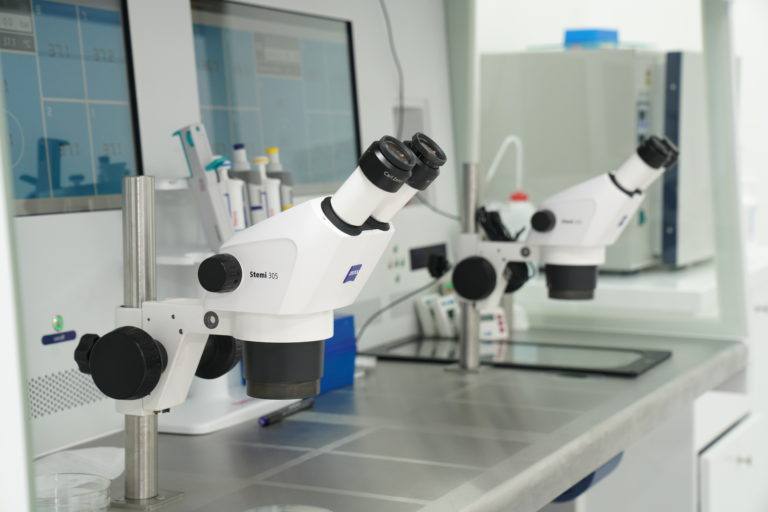
Embryology Laboratory
Samples are analyzed with the NIFTY® laboratory platform by BGI, used in millions of pregnancies worldwide, with results reviewed by your EuroCARE doctor.
80%+
7 Days
Coordinator Availability
2 Hrs
Response Time
MoH
Regulated & Inspected
Real Stories from EuroCARE Families

“Sherry was my point of contact and she was absolutely amazing. All the staff were attentive, supportive and really friendly. I had a positive pregnancy test two weeks after insemination and had twins — a boy and a girl — in March. I have nothing but glowing reviews for EuroCARE IVF. Very supportive, very informative, and a fraction of the price compared to the UK.”
— Amber, UK Patient

“I cannot thank Dr. Yucel and his team enough for making our dreams come true! Lyndsay is a coordinator like no other — friendly, kind, knowledgeable, and prompt. Without her, nothing would have been possible. My journey wasn’t easy and I had to do a few rounds of IVF to get my princess, but we never gave up. Each time, Dr. Yucel, Lyndsay and the team discussed different options with us. The clinic is lovely and clean, everyone makes you feel at ease, and I can say EuroCARE IVF is top when it comes to fertility centres. This is our 4th child and we are now complete. My heart is full.”
— Tanya, UK Patient

“Total satisfaction — everything went well on the first try and we have a beautiful little girl. The staff were pleasant, helpful and professional. The smaller, family-like environment of the clinic was great — they have time to take care of you. I can only recommend.”
— Jan, Czech Patient
Frequently Asked Questions — NIPT
The core panel screens for trisomy 21 (Down syndrome), trisomy 18 (Edwards syndrome), trisomy 13 (Patau syndrome) and sex-chromosome conditions. Extended NIFTY® panels can screen additional chromosome conditions — your doctor will advise which panel fits your situation.
NIFTY® is the brand of NIPT used at EuroCARE, developed by BGI. It’s one of the most widely used non-invasive prenatal tests in the world, validated in large clinical studies and used in millions of pregnancies.
Detection of trisomy 21 is over 99%, with a false-positive rate under 1%. Accuracy is slightly lower for the rarer conditions. Because it’s a screening test, a high-risk result is always confirmed with a diagnostic test before any conclusion.
From week 10 of pregnancy onward, once a scan confirms your dates. There’s no upper limit — but earlier gives you more time with the information.
Completely. The sample is ordinary blood from your arm — the test analyzes fragments of the baby’s DNA already circulating in your bloodstream. Nothing touches the womb, so there is zero procedure-related risk of miscarriage.
First: a high-risk result is not a diagnosis. Your doctor will explain the result, and a diagnostic test (amniocentesis or CVS) confirms or rules it out. EuroCARE arranges the confirmation and genetic counselling — you won’t be handed a result and left to figure it out.
Yes — if you want to know, the report can include your baby’s sex, usually accurate above 99%. If you’d rather be surprised, we simply leave it out.
Yes. NIFTY® is validated for twin pregnancies and for IVF pregnancies, including those conceived with donor eggs. Screening for sex-chromosome conditions is limited in twins — your doctor will explain the specifics.
They work together. PGT-A tested a few cells from the embryo before transfer; NIPT screens the actual ongoing pregnancy. Most doctors see NIPT as a sensible confirmation even after a tested embryo. See our genetic testing overview.
Typically around ten working days from the blood draw. Your coordinator confirms the current turnaround when you book and sends the results to you directly.